Utah
The Beehive State
Quick Stats
Map
Seal & Motto
“Industry”
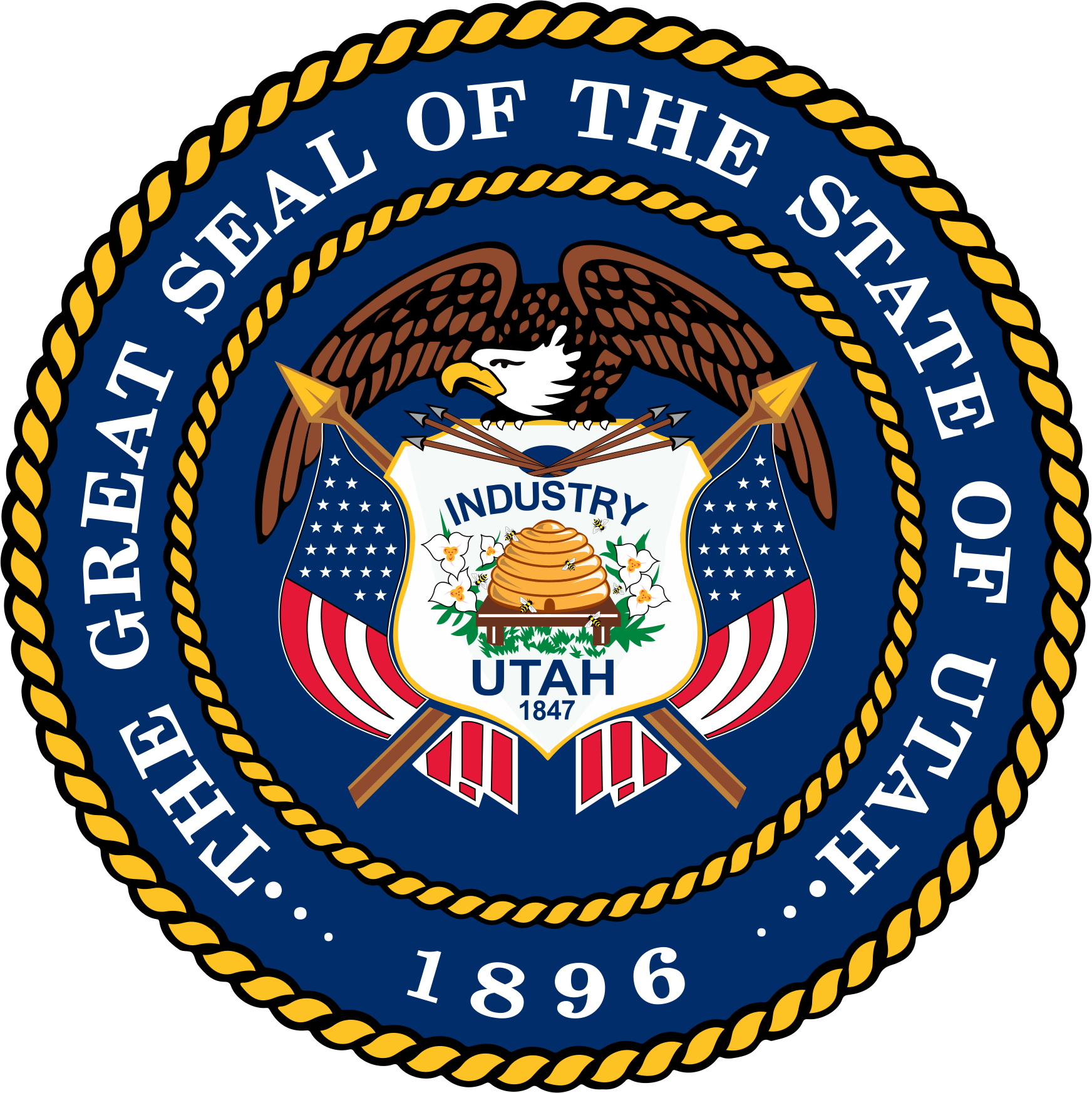
A single word chosen during Utah’s territorial years, “Industry” was inspired by the beehive — the Mormon pioneer symbol of collective work and cooperative effort. Representing the ethos of those who transformed the Great Basin desert into a civilization, it remains the simplest and most direct state motto in the American West, adopted upon statehood in 1896.
State Flag
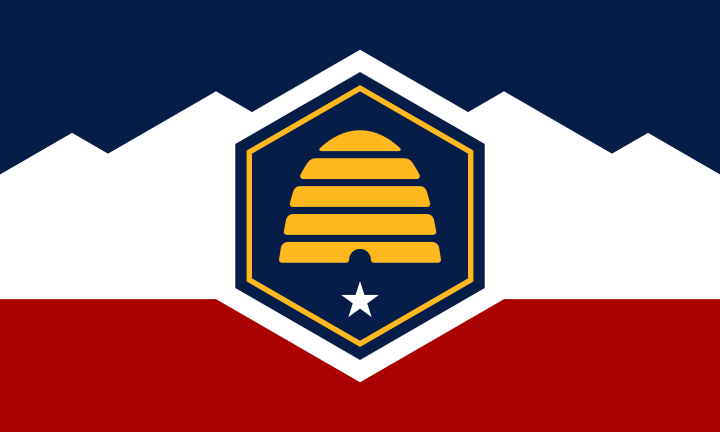
Utah’s flag places the state coat of arms on a deep navy-blue field. The coat of arms features a central beehive, sego lilies, two American flags flanked by a bald eagle, and the key dates 1847 and 1896 marking the pioneer arrival and statehood. Adopted in 1896, it remains one of the most symbolically complex state flags in the United States.
- Navy Blue Field — The deep navy-blue background evokes the open skies of the American West, reflecting the spirit of Utah’s Mormon pioneers who crossed the Great Plains to build a civilization in the desert.
- Beehive — The central beehive is Utah’s defining emblem of industry and collective effort, representing Mormon pioneer discipline that built a thriving civilization from the arid Great Basin through organized cooperative labor.
- Sego Lily — Flanking the beehive, sego lily flowers represent purity and sustenance — the bulbs literally saved early Mormon pioneers from starvation, making this wildflower a symbol of survival and pioneer resilience.
- Dates 1847 & 1896 — Two dates on the shield mark Utah’s key moments — 1847, when Brigham Young led settlers to the Salt Lake Valley, and 1896, when Utah was admitted as the 45th state.
State Symbols
Overview
Utah is one of the most visually extraordinary states on Earth. Its red-rock canyon country, sculpted over millions of years by water and wind, contains more named natural arches than anywhere on the planet and five of America’s most spectacular national parks. Paired with world-class ski resorts boasting “the Greatest Snow on Earth” — an average of 500 inches of light, dry powder — and a booming Silicon Slopes tech corridor between Salt Lake City and Provo, Utah is a state of relentless, industrious beauty.
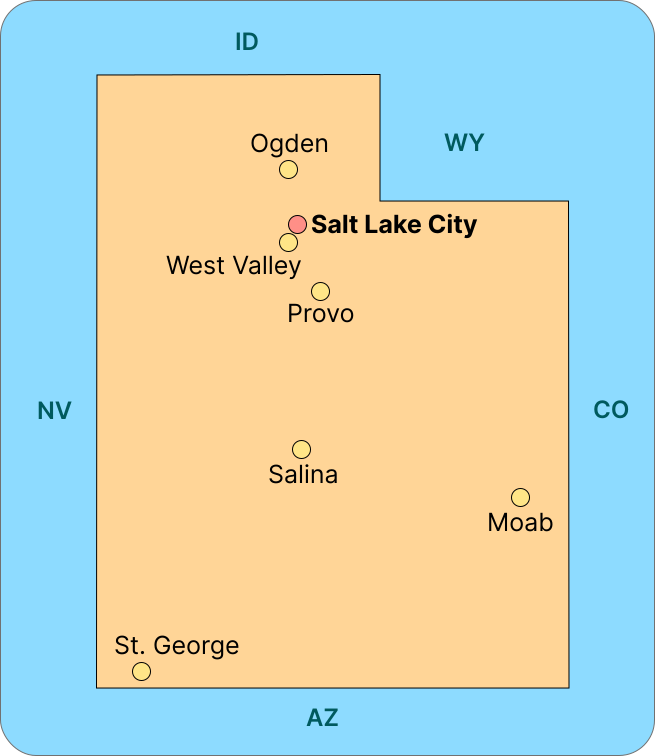
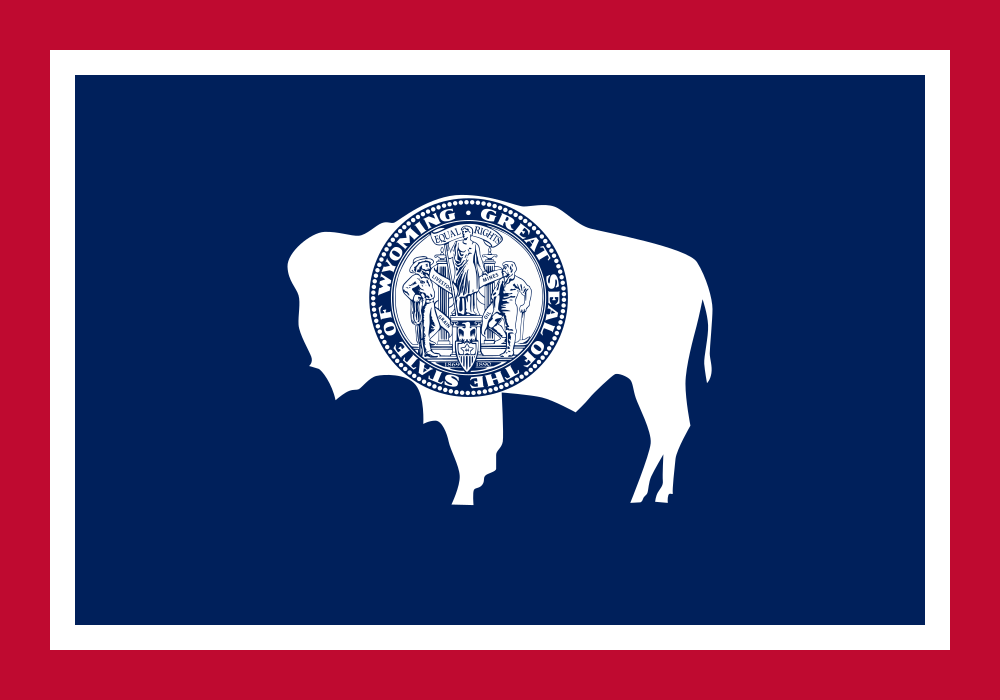
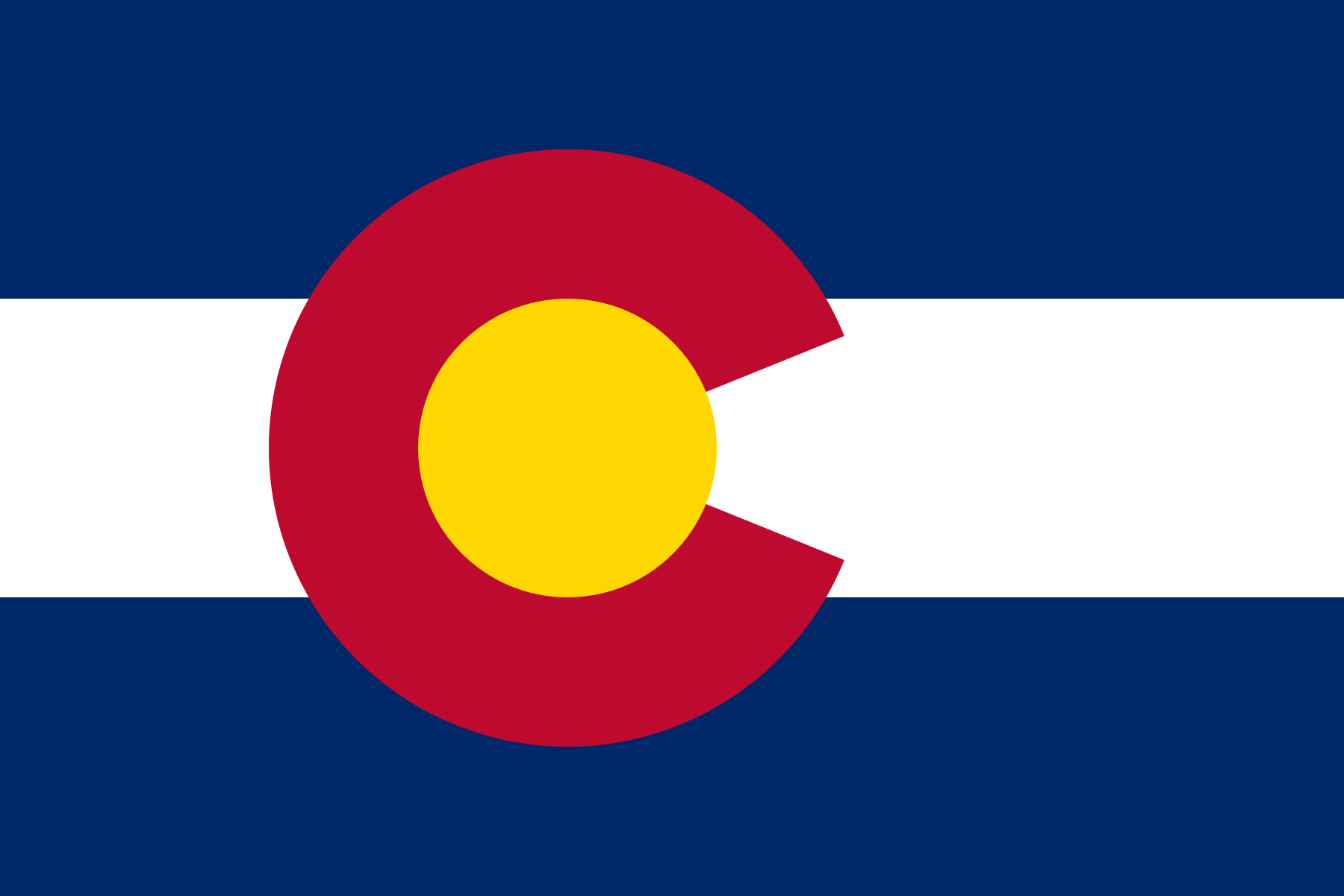
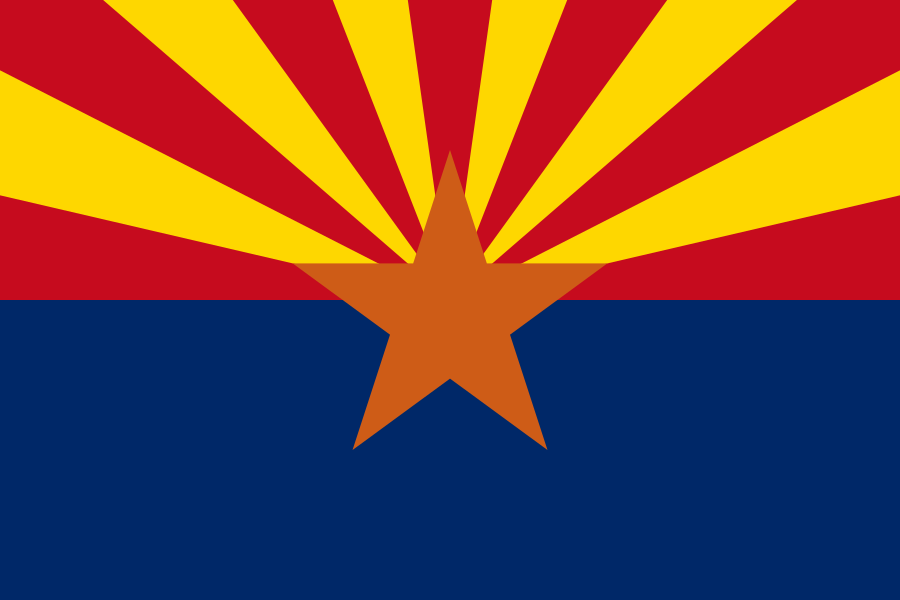
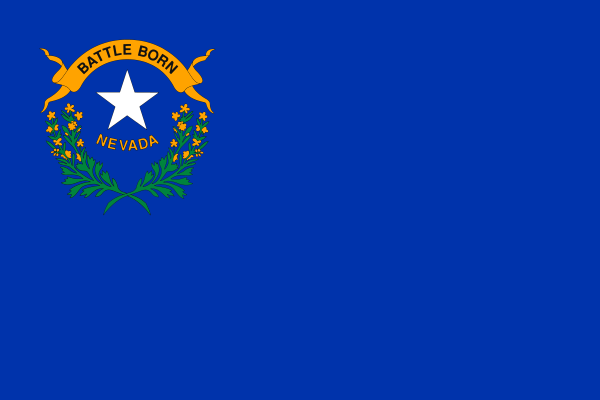
Geographically, it shares borders with ID, WY, CO, AZ, NV, and NM, forming a closely connected regional network.
Historical Significance
Utah became the 45th state on January 4, 1896, after decades of statehood denial over the practice of polygamy. Its history is defined by Brigham Young leading 70,000 Mormon pioneers across the plains in 1847 to build Salt Lake City in the desert, the transcontinental railroad’s golden spike at Promontory Summit in 1869, and the creation of Zion National Park in 1919 — the beginning of an extraordinary national park system that would eventually encompass the legendary Mighty Five.
Fascinating People
Top Cities & Hubs
Salt Lake City
Population: ~200,000The state capital and spiritual headquarters of The Church of Jesus Christ of Latter-day Saints — a cosmopolitan city at the foot of the Wasatch Range with world-class skiing 30 minutes away and a booming tech and finance sector.
West Valley City
Population: ~140,000The state’s second-largest city, a diverse and dynamic residential hub just west of Salt Lake City and a major commercial center serving the greater Wasatch Front metropolitan region.
Provo
Population: ~115,000Home to Brigham Young University and the Silicon Slopes tech corridor, Provo is a national leader in startup formation, was named America’s “Digital City,” and consistently ranks as one of the most prosperous cities in the nation.
West Jordan
Population: ~117,000One of the nation’s fastest-growing communities, a family-oriented city in the Salt Lake Valley with strong retail and business sectors and easy access to the Oquirrh and Wasatch mountain ranges.
Orem
Population: ~98,000Adjacent to Provo and sharing its Silicon Slopes economy, Orem is a major retail and business hub consistently ranked among the nation’s most prosperous and family-friendly cities.
How Utah Ranks
Utah’s five national parks — Zion, Bryce Canyon, Arches, Canyonlands, and Capitol Reef — draw over 12 million visits annually and offer the most concentrated canyon scenery anywhere on Earth.
Utah’s Wasatch Range receives 500+ inches of dry powder annually. Alta, Brighton, Snowbird, and Park City consistently rank among North America’s best ski resorts, fueled by Great Salt Lake lake-effect snow.
Utah leads national rankings in economic vitality from Forbes and the Milken Institute, driven by Silicon Slopes tech, aerospace manufacturing, outdoor recreation, and one of the most educated young workforces in the nation.
Utah has the youngest median age and highest birth rate of all 50 states and consistently ranks as the nation’s fastest-growing state — gaining 18% in population between 2010 and 2020.
Key Landmarks & Economy
Did You Know?
- Utah’s tech corridor between Salt Lake City and Provo is known as “Silicon Slopes” — one of the fastest-growing tech economies in the U.S., home to Adobe, Qualtrics, and over 6,000 tech companies, earning Utah consistent top rankings for business climate.
- The Transcontinental Railroad was completed at Promontory Summit, Utah on May 10, 1869, when a golden spike was ceremonially driven where the Central Pacific and Union Pacific locomotives met — linking the continent coast to coast.
- Utah’s Pando aspen grove in Fishlake National Forest is considered the world’s largest known living organism — a single clonal colony of 47,000 quaking aspen trees sharing one root system, covering 106 acres and weighing 6 million kg.
Additional Information
84001 (Altamont) – 84784 (Hildale)
Demographics
Population Growth
You might also like
Test Your Utah Knowledge
5 questions about the Beehive State
What is Utah's official state nickname?
What is the capital city of Utah?
Utah was the ___ state to join the Union?
What are Utah's five national parks collectively called?
In what year did Mormon pioneers first arrive in the Salt Lake Valley?