South Carolina
The Palmetto State
Quick Stats
Map
Seal & Motto
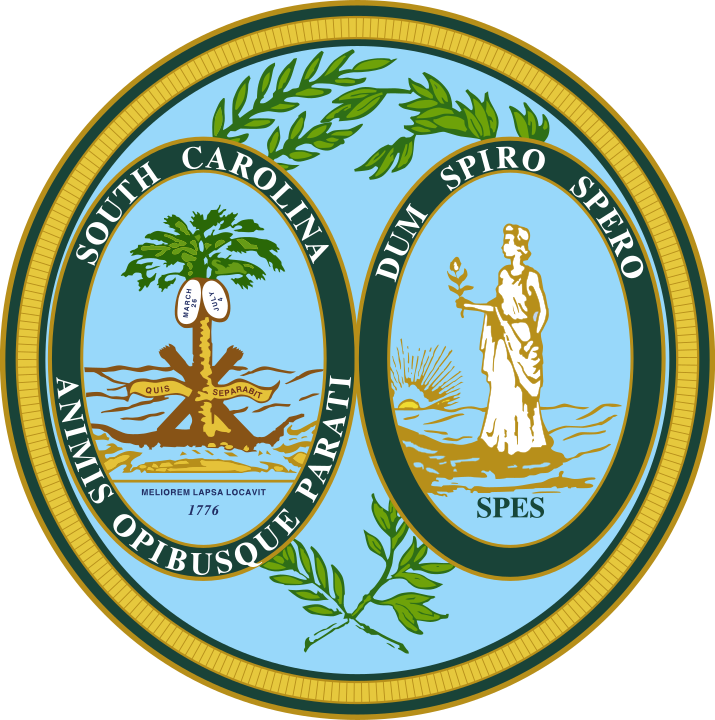
"Dum Spiro Spero"
Latin for "While I breathe, I hope," adopted in 1776 as South Carolina declared independence from Britain. The motto reflects the defiant spirit of a colony that had just repelled a British naval assault at Fort Sullivan — and would go on to be both the first to secede and the first where the Civil War was fought.
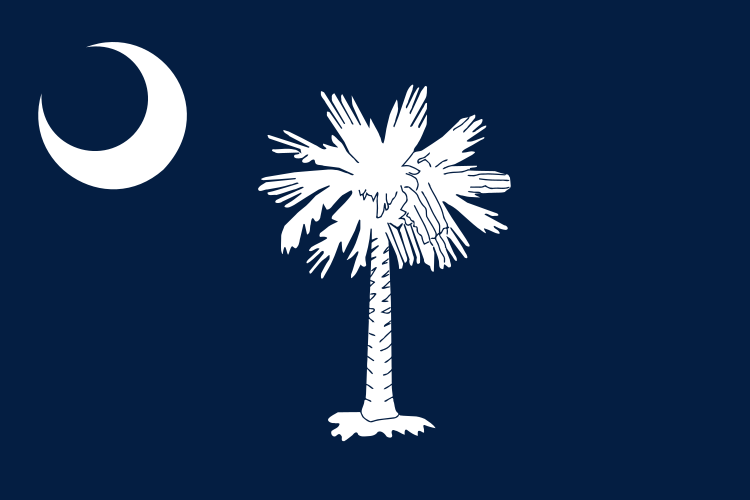
Flag & Its Meaning
South Carolina's flag features a white palmetto tree and crescent on an indigo field — two symbols born from a single battle. At Fort Sullivan in 1776, palmetto log walls absorbed British cannonballs while soldiers wore crescent-adorned caps, turning both into enduring emblems of resilience.
- Indigo Field — The deep blue background honors indigo, colonial South Carolina's most valuable cash crop and a cornerstone of its early plantation economy.
- Palmetto Tree — The sabal palmetto commemorates Fort Sullivan's log walls, whose spongy wood deflected British cannonballs in the pivotal 1776 battle that saved Charleston.
- Crescent — The silver crescent represents the gorget worn on colonial soldiers' caps during the Revolutionary War, a mark of rank and valor in battle.
- Combined Legacy — Together, palmetto and crescent have appeared on South Carolina's flag since 1861 — making it one of the most historically rooted state flags in the nation.
State Symbols
Overview
South Carolina, the "Palmetto State," is a state of extraordinary contrasts — from the cobblestone streets and antebellum grandeur of Charleston to the red clay hills of the Upstate and the emerald marshes of the Lowcountry. It is where the Civil War began, where Gullah Geechee culture survives on the Sea Islands, and where BMW and Boeing have built world-class manufacturing plants, blending a profound history with a modern industrial resurgence.
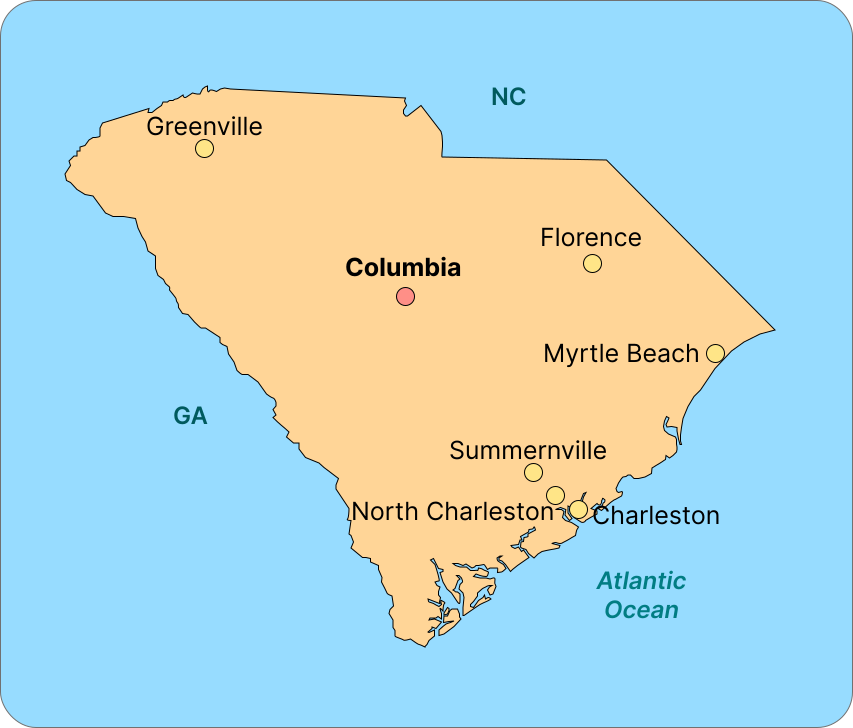
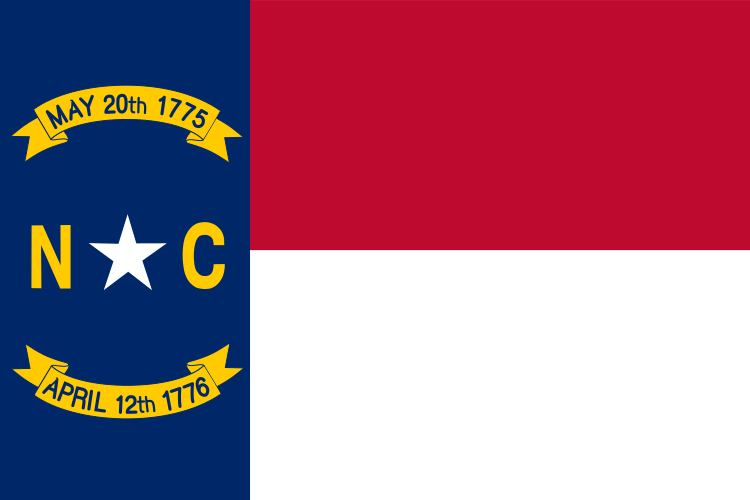
Geographically, it shares borders with NC and GA, forming a closely connected regional network.
Historical Significance
South Carolina joined the Union on May 23, 1788 as the 8th state. The Revolutionary War's first major southern victory came at Fort Sullivan in 1776; on December 20, 1860 South Carolina became the first state to secede; and on April 12, 1861 Confederate forces fired on Fort Sumter, igniting the Civil War. Few states carry a weightier role in the full arc of American history.
Famous Natives
Top Cities & Hubs
Charleston
Population: ~150kOne of America's most beloved cities, famed for Rainbow Row, Fort Sumter, and a nationally acclaimed food scene rooted in Lowcountry cuisine.
Columbia
Population: ~137kThe state capital, home to the University of South Carolina and Fort Jackson — the nation's largest Army basic training installation.
North Charleston
Population: ~117kIndustrial hub hosting Boeing's 787 Dreamliner final assembly plant and the region's main commercial airport.
Mount Pleasant
Population: ~95kConsistently ranked among the nation's best places to live, across the harbor from Charleston on Sullivan's Island.
Greenville
Population: ~70kJewel of the Upstate, whose transformed downtown around Falls Park on the Reedy River is a national model for urban revitalization.
How South Carolina Ranks
.svg)
Key Landmarks & Economy
Did You Know?
- South Carolina was the first state to secede from the Union on December 20, 1860, and Fort Sumter was where the Civil War's very first shots rang out on April 12, 1861.
- The iconic Sabal Palmetto on the flag earned its place when Fort Sullivan's log walls absorbed British cannonballs in 1776 — the spongy wood simply refused to shatter.
- The Gullah Geechee people of the Sea Islands have preserved a distinct African-based language, cuisine, and culture for over 300 years, now recognized as a National Heritage Corridor.
Additional Information
29001 (Alcolu) – 29948 (Yemassee)
Demographics
Population Growth
You might also like
Test Your South Carolina Knowledge
5 questions about the Palmetto State
What is South Carolina's official state nickname?
What is the capital city of South Carolina?
South Carolina was the ___ state to join the Union?
Where were the first shots of the Civil War fired?
What does South Carolina's state motto "Dum Spiro Spero" mean?