North Carolina
The Tar Heel State
Quick Stats
Map
Seal & Motto
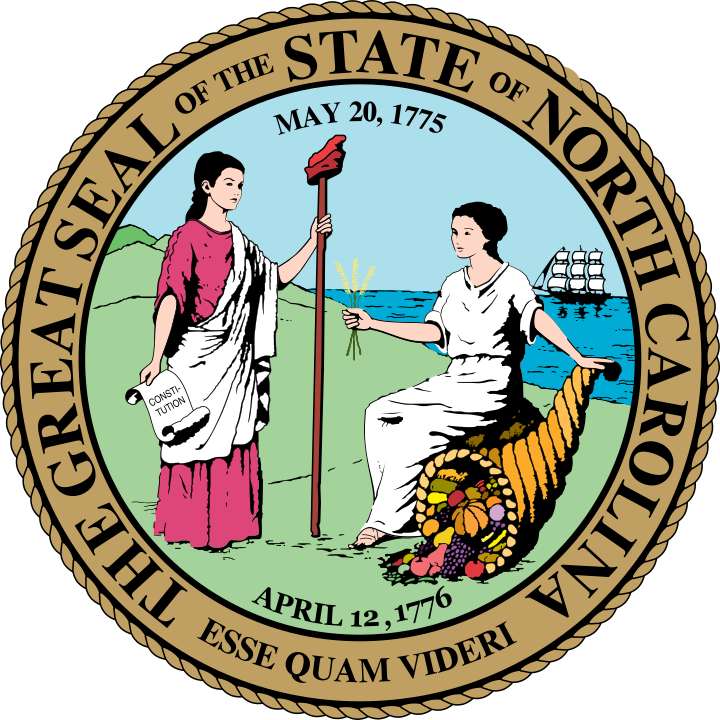
“Esse Quam Videri”
Latin for “To be, rather than to seem,” this phrase was taken from Cicero’s essay De Amicitia and adopted as North Carolina’s motto in 1893. It is a call to authentic character over mere appearance — a fitting declaration for a state that has long preferred substance over spectacle, from its Revolutionary-era leadership to its quietly world-changing contributions in science, flight, and education.
Flag Meaning
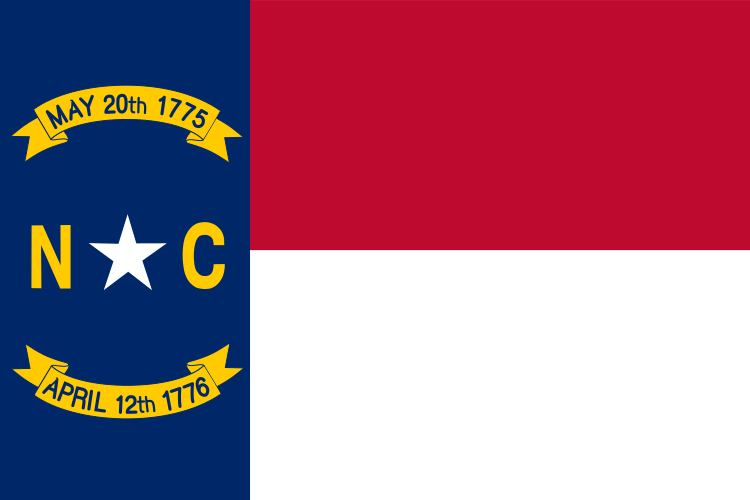
North Carolina’s flag bears two vertical bands — blue on the left, red on the right — flanking a central white star with gold “N” and “C.” Two gold scrolls record the dates of pivotal colonial declarations, making this the only U.S. state flag to prominently display dual historic dates tied to American independence.
- Blue Band — Represents loyalty and justice, honoring the Continental Army soldiers from North Carolina who fought for independence throughout the Revolutionary War.
- Red Band — Symbolizes valor and the sacrifices of North Carolinians in war, from the Revolution to the Civil War and every conflict since.
- May 20th 1775 — The Mecklenburg Declaration of Independence, signed in Charlotte — one of the earliest local declarations of independence from British rule in the colonies.
- April 12th 1776 — The Halifax Resolves, the first official governmental action in America to explicitly authorize independence from Great Britain — a uniquely North Carolinian milestone.
State Symbols
Overview
North Carolina, the “Tar Heel State,” is one of the most geographically and economically diverse states in the nation. From the Atlantic’s wild Outer Banks to the ancient peaks of the Blue Ridge, and from a booming finance hub in Charlotte to the global innovation engine of Research Triangle Park, it is the South’s fastest-rising powerhouse — consistently ranking among the top states for business, population growth, and quality of life.
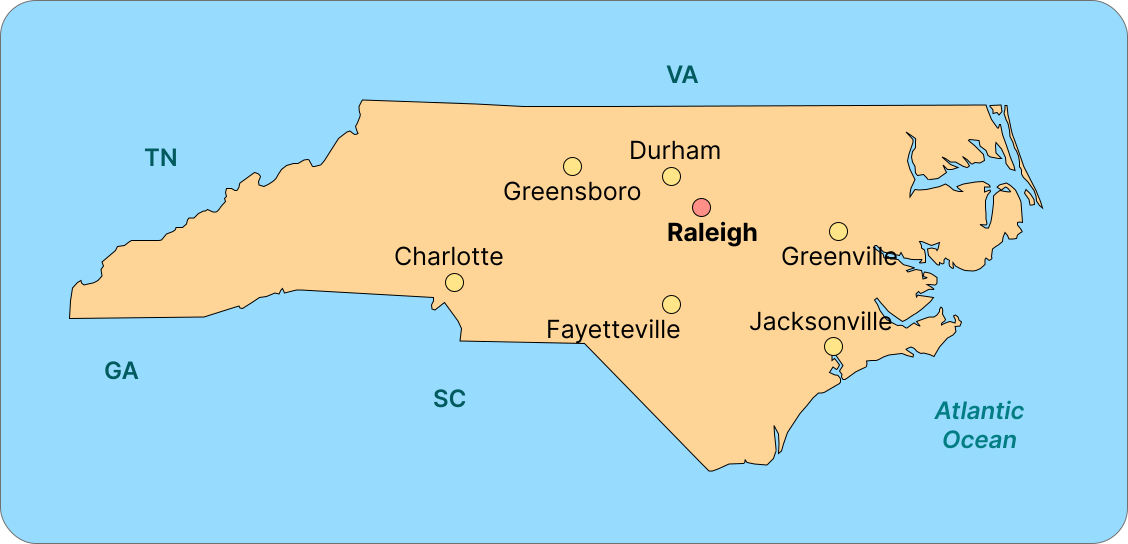
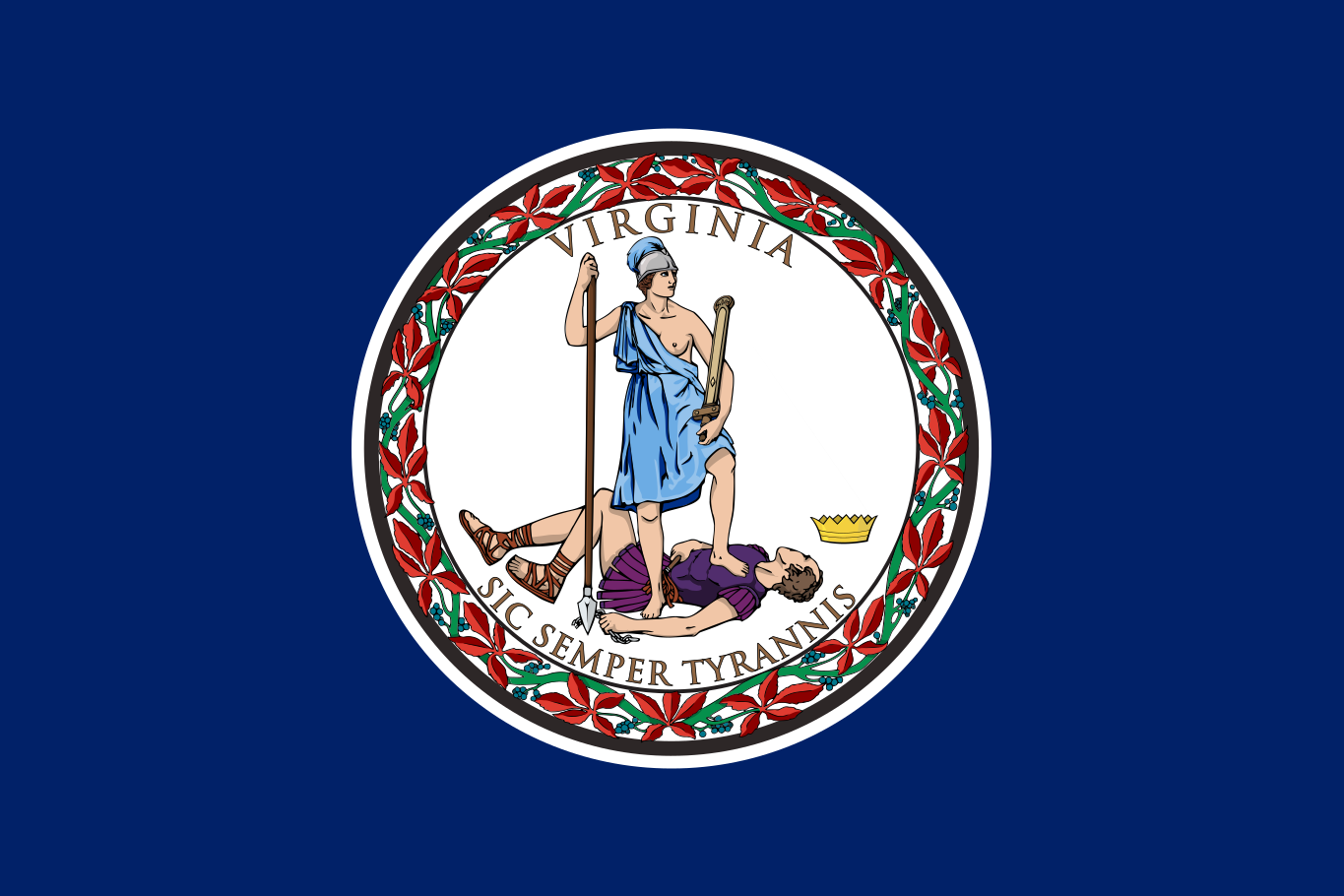
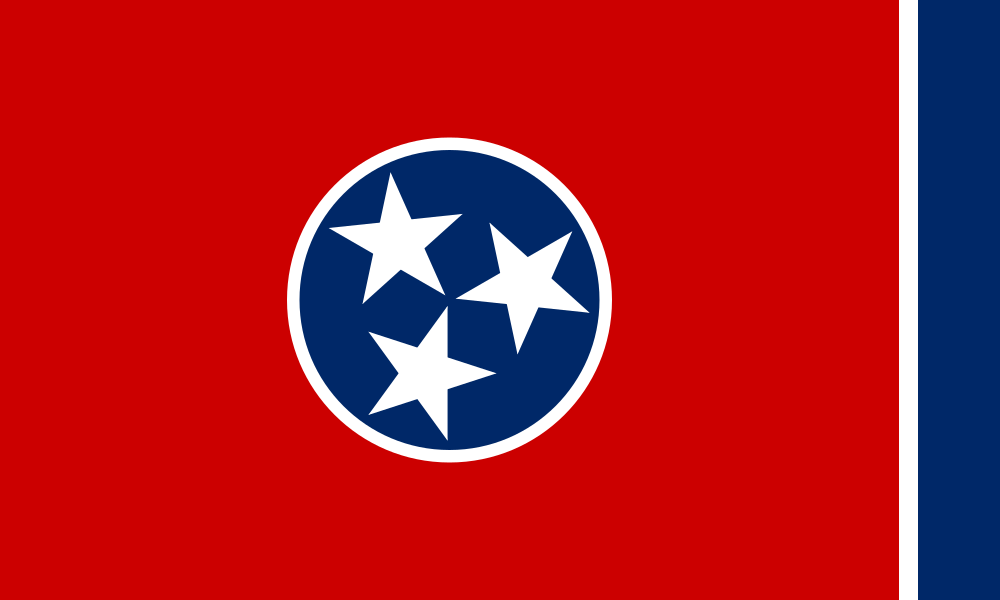
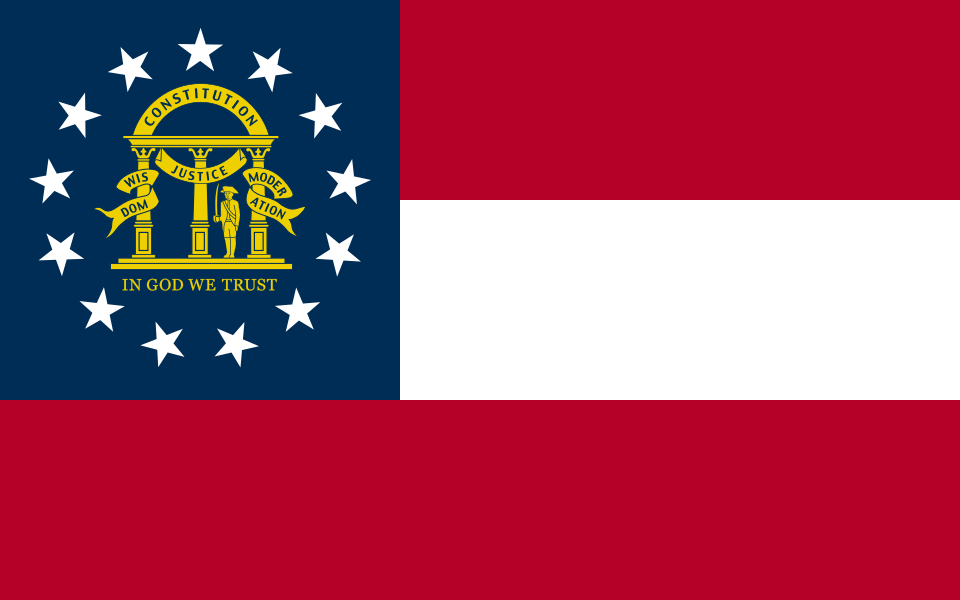
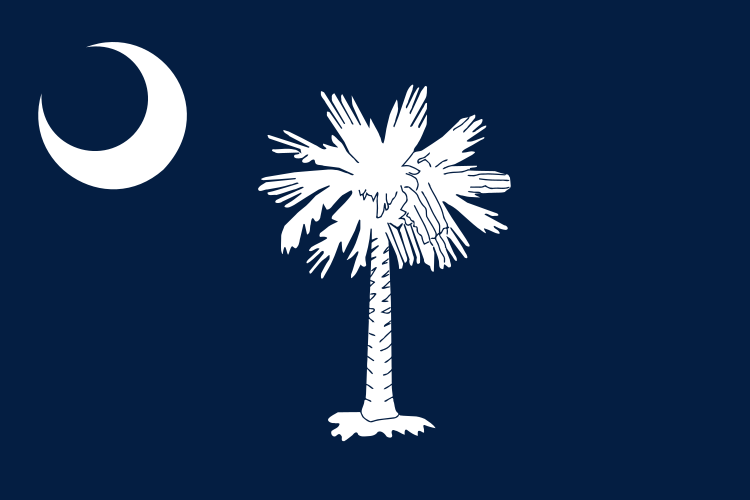
Geographically, it shares borders with Virginia, Tennessee, Georgia, and South Carolina, forming a closely connected regional network.
Historical Significance
North Carolina officially joined the Union on November 21, 1789, as the 12th state. Its history stretches from the Lost Colony of Roanoke in 1587 — the first English settlement in the Americas and one of history’s great mysteries — through its pivotal Revolutionary War victories at Guilford Court House, to the morning of December 17, 1903, when Wilbur and Orville Wright lifted off at Kitty Hawk and forever changed what it means to be human.
Famous Natives
Top Cities & Hubs
Charlotte
Population: ~880,000The state’s largest city and the second-largest banking hub in the U.S. after New York City, home to Bank of America and Truist Bank headquarters — a financial powerhouse of the modern South.
Raleigh
Population: ~470,000The state capital and tech heart of the South, anchoring Research Triangle Park alongside Durham and Chapel Hill — one of the largest and most productive research parks in the world.
Greensboro
Population: ~300,000A historically significant city and major site of the 1960 Civil Rights sit-in movement, now a growing hub for healthcare, logistics, and higher education in the Piedmont Triad region.
Durham
Population: ~285,000Home to Duke University and its globally ranked medical center, a key vertex of Research Triangle Park and a nationally celebrated food, arts, and startup scene.
Winston-Salem
Population: ~250,000Once the tobacco and textile capital of the South, now a thriving center for biotechnology and regenerative medicine research anchored by Wake Forest University Medical Center.
How North Carolina Ranks
Compared to all 50 states — bar shows relative standing (#1 = full bar)
Neighbors
Key Landmarks & Economy
Did You Know?
- North Carolina is “First in Flight” — the Wright Brothers chose Kitty Hawk for its consistent winds, soft sand, and isolation, and this historic achievement is commemorated on the state’s license plates.
- The state produces over 60% of the nation’s sweet potatoes, growing them in the fertile sandy soils of the eastern coastal plain — far more than any other state in America.
- Pepsi-Cola was invented in New Bern, North Carolina in 1893 by pharmacist Caleb Bradham, who originally called his creation “Brad’s Drink” before renaming it in 1898.
Additional Information
27006 (Advance) → 28909 (Warne)
~900+ ZIP codes statewide
252 / 336 / 704 / 743 / 828 / 910 / 919 / 980 / 984
Demographics
Population Growth
You Might Also Like
North Carolina Trivia Quiz
Test your knowledge of the Tar Heel State — 5 questions await.
What is North Carolina's official state nickname?
In what year was North Carolina admitted to the Union?
Which famous basketball player was born in Wilmington, North Carolina?
What is the capital city of North Carolina?
Near which North Carolina location did the Wright Brothers make the world’s first powered airplane flight in 1903?