District of Columbia
The Nation's Capital
Quick Stats
Map
Seal & Motto
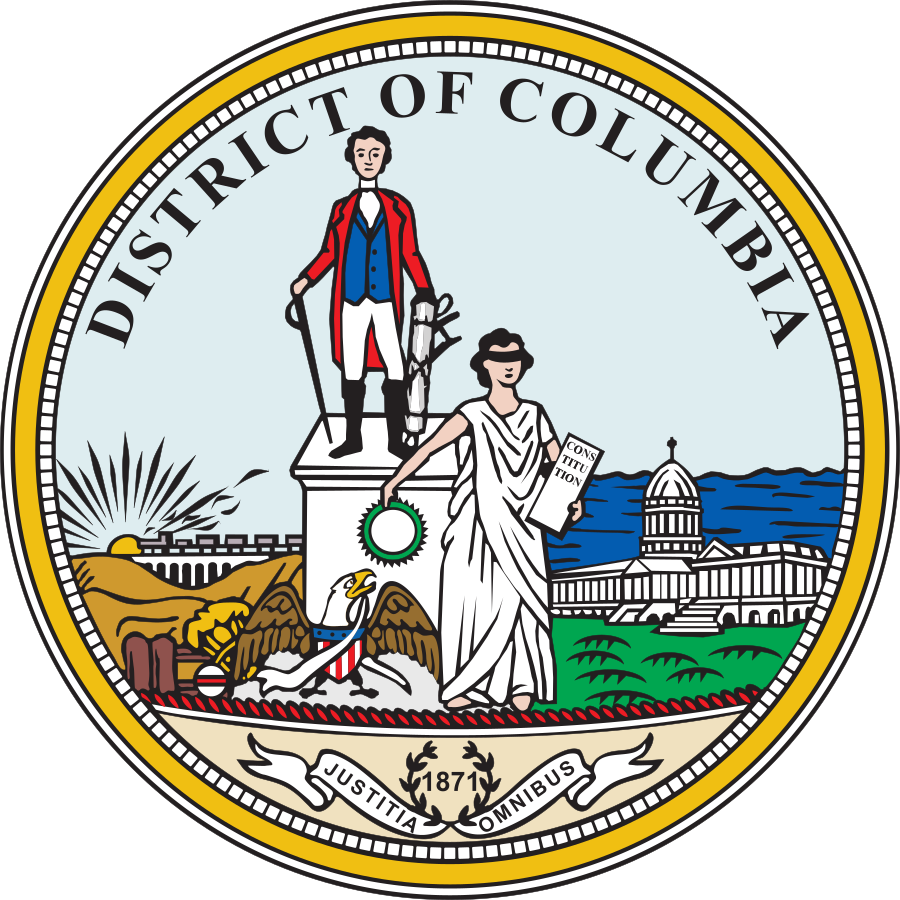
"Justitia Omnibus"
Latin for "Justice for All." The motto appears on the DC flag and seal, reflecting the city's role as the seat of American democracy and equal justice under law. Adopted 1871.
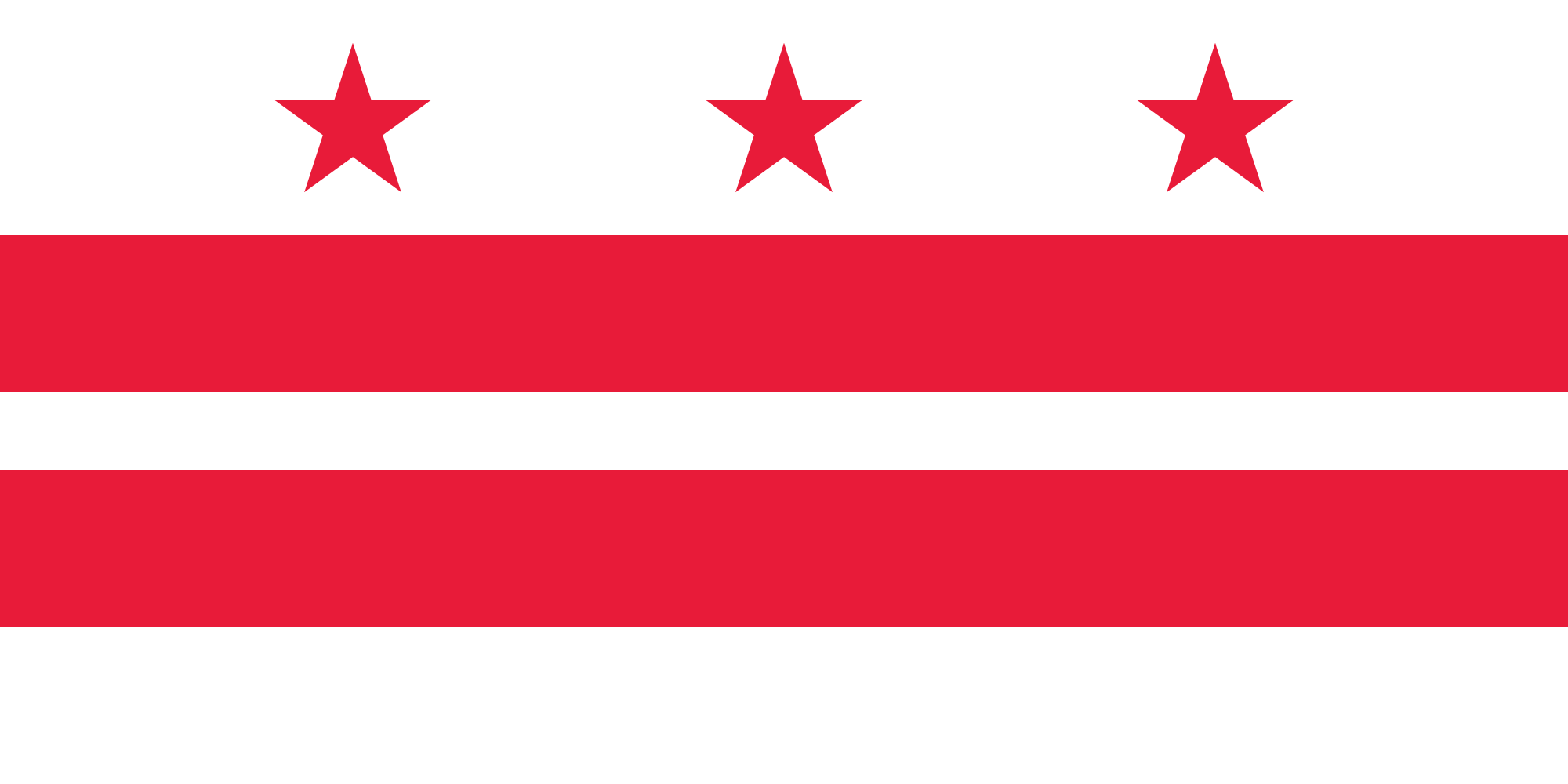
Flag Meaning
The DC flag is based on George Washington's family coat of arms — two horizontal red stripes and three red stars on a white field. Adopted in 1938, it has become a potent symbol of statehood advocacy.
- Three Red Stars — represent the three commissioners who originally governed the District, and echo the Washington family crest.
- Two Red Stripes — also derived from the Washington coat of arms; the bars symbolize heritage and continuity.
- White Field — represents purity and the city's aspirations as the capital of democracy.
District Symbols
Overview
Washington D.C. is unlike any other place in the United States — a planned federal city that is simultaneously the world's most powerful address and an open museum of American democracy. Carved from land ceded by Maryland and Virginia in 1790, it was designed by Pierre Charles L'Enfant on a grand diamond grid of diagonal avenues and ceremonial circles. Today it is a city of monuments and embassies, of marble corridors and vibrant neighborhoods, home to 712,000 residents who live at the center of institutions that shape the entire world.
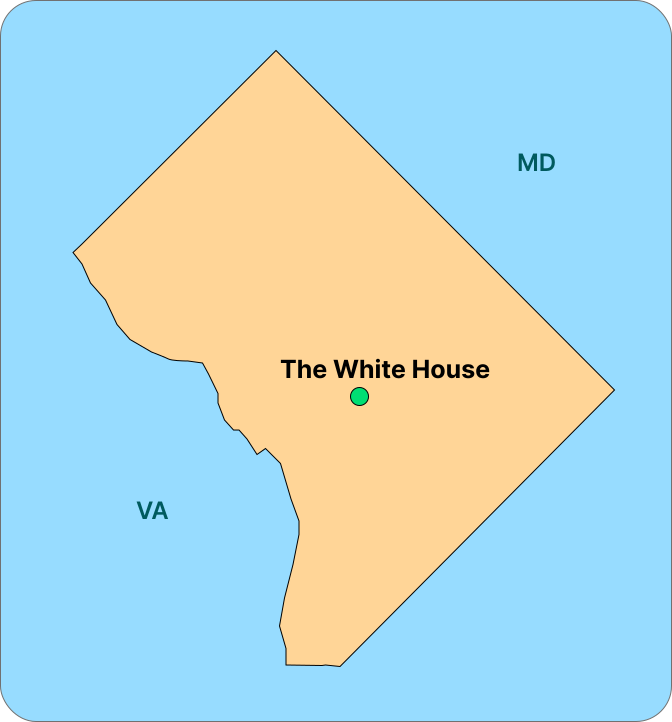
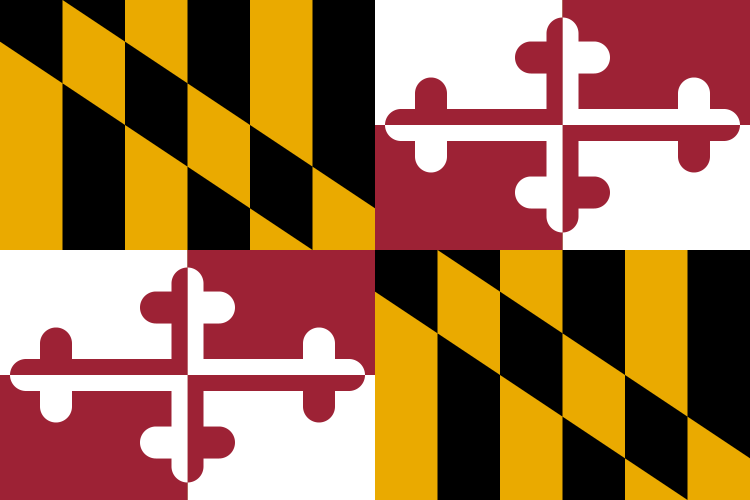
Geographically, it shares borders with Maryland and Virginia, forming a closely connected regional network.
Historical Significance
The District was formally established on July 16, 1790 by the Residence Act, with George Washington personally selecting the site along the Potomac River. By 1800, Congress and President Adams had relocated from Philadelphia. The city was burned by British forces in 1814, rebuilt, and became the stage for the nation's most consequential moments — Lincoln's Second Inaugural, FDR's New Deal, the 1963 March on Washington where Dr. King delivered "I Have a Dream," and 57 Presidential Inaugurations held on the Capitol's East Front.
Notable Residents
Key Areas & Neighborhoods
The National Mall
Civic Heart of the NationA 1.9-mile open greensward flanked by 19 Smithsonian museums — all free — anchored by the Lincoln Memorial at one end and the U.S. Capitol at the other, with the Washington Monument rising at its center.
Capitol Hill
Political CenterHome to the U.S. Capitol, the Supreme Court, and the Library of Congress — the world's largest library with 173 million items in 470 languages.
Georgetown
Historic Waterfront DistrictPredating the city itself, Georgetown features cobblestone streets, Federal-era architecture, high-end shopping on M Street, and Georgetown University.
Dupont Circle
Cultural & Diplomatic HubWashington's most cosmopolitan neighborhood, ringed by dozens of embassies, world-class bookstores, and international restaurants.
The Wharf
Modern WaterfrontAward-winning restaurants, the Anthem live music venue, and the oldest continuously operating open-air fish market in the country, since 1805.
How D.C. Ranks
Compared to all 50 states + DC — bar shows relative standing
Additional Information
20001 (NW) → 20599 (Gov)
~131 ZIP codes district-wide
Key Landmarks & Economy
Did You Know?
- DC residents did not gain the right to vote for President until the 23rd Amendment in 1961. They still have no voting representation in Congress.
- The Library of Congress is the largest library in the world — 173 million items in 470 languages.
- Building heights are capped by the Height of Buildings Act of 1910 at 130 feet, giving DC its distinctive low-rise skyline.
Demographics
Population Growth
Avg. Monthly Temperature
You might also like
🧠 D.C. Trivia
5 questions — how well do you know the nation's capital?
In what year was the District of Columbia officially established?
What is D.C.'s official motto?
Which French-born architect designed the original plan for Washington D.C.?
How many Smithsonian museums are in Washington D.C.?
Which amendment gave D.C. residents the right to vote for President?